
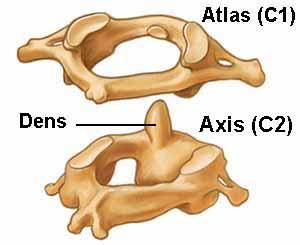
When we think about our spine, we often envision the long column of bones that runs down our back, supporting our body’s weight and enabling us to stand, walk, and move. But the spine is much more than just a support structure—it’s a complex system of bones, muscles, ligaments, and nerves that work together to allow movement and flexibility. Among the many vertebrae in the spine, one particularly interesting bone stands out: the axis spine.
The axis, or C2 vertebra, plays a critical role in supporting the skull and allowing us to turn our heads from side to side. If you’ve ever wondered how you can look over your shoulder or twist your head to check for traffic, you can thank the axis for making those movements possible. But there’s much more to this vertebra than meets the eye. Let’s dive deeper into the anatomy and function of the axis spine and why it’s essential for your everyday movements.
1. What is the Axis Spine?
The axis is the second vertebra in the cervical (neck) region of your spine, located just below the first cervical vertebra, known as the atlas. Together, the atlas and axis form a crucial connection between the skull and the spine, enabling some of the most vital movements of the head and neck.
Unlike other vertebrae in the spine, the axis is uniquely shaped. It has a peg-like structure called the odontoid process or dens, which sticks up from its body. This dens fits into a small depression in the atlas, allowing the head to rotate around this central pivot point. This pivoting function is what gives us the ability to rotate our heads from side to side, an essential movement for tasks such as driving, looking over our shoulder, or simply turning to speak to someone behind us.
2. The Role of the Axis in Movement
One of the axis spine's primary functions is to enable rotation of the head. Without the axis, we would have limited mobility in our necks, making everyday tasks far more difficult. Here’s a closer look at how the axis contributes to movement:
a. Neck Rotation
The axis allows for about 45 degrees of rotation to either side of your head, which is essential for turning your head while keeping your body stationary. For example, when you look over your shoulder while driving, the movement occurs because of the joint between the axis and atlas. This rotation is vital for activities like driving, sports, and simply orienting yourself in space.
b. Flexion and Extension
While the axis is best known for enabling rotation, it also plays a supporting role in allowing flexion (nodding) and extension (tilting the head back). Although these movements are largely facilitated by the atlas vertebra, the axis provides additional stability to the head and neck as they move in these directions.
3. Anatomy of the Axis Spine
To fully appreciate how the axis functions, it helps to understand its unique anatomical structure. The axis consists of the following parts:
a. The Dens (Odontoid Process)
The dens is the most distinctive feature of the axis. It’s a tooth-like projection that sticks up from the top of the vertebra and fits snugly into the atlas. The dens serves as a pivot point, allowing the atlas—and thus the skull—to rotate around it. This intricate design enables smooth, controlled rotation while also maintaining stability.
b. The Vertebral Body
Like other vertebrae, the axis has a vertebral body that supports the weight of the skull and the head. The vertebral body is crucial for maintaining proper posture and alignment within the spine.
c. The Articular Facets
The axis has specialized joints called articular facets that connect to the atlas. These joints are responsible for facilitating the rotation of the head. The smooth surface of the articular facets allows for frictionless movement between the atlas and axis.
d. The Spinal Canal
The spinal canal in the axis houses the spinal cord, which transmits nerve signals between the brain and the rest of the body. The axis ensures that the spinal cord remains protected while allowing for the necessary movement of the head and neck.
e. Ligaments and Muscles
Ligaments and muscles in the neck provide the necessary support and stability for the axis and other cervical vertebrae. The transverse ligament, for example, plays a crucial role in holding the dens in place, preventing it from dislocating and causing serious injury.
4. Why the Axis Spine is So Important
The axis might seem small compared to the other vertebrae in your spine, but it plays a massive role in your overall mobility and function. Without the axis, your range of motion in the neck would be limited, severely impacting everyday activities. Here are a few reasons why the axis spine is so vital:
a. Crucial for Proper Posture
The axis is essential for maintaining proper alignment between the skull and the cervical spine. Any misalignment in the axis can lead to problems with posture, causing discomfort and strain on the neck, shoulders, and back. Proper alignment of the axis helps maintain a neutral position for the head and reduces the risk of developing musculoskeletal issues.
b. Prevents Injury to the Spinal Cord
Given that the axis is so close to the spinal cord, any issues with the axis can have severe consequences for nerve function. Damage to the axis, particularly the dens, can lead to instability, increasing the risk of compressing the spinal cord. This can result in significant neurological symptoms, such as numbness, weakness, or even paralysis. The structural integrity of the axis is crucial for preventing such injuries.
c. Affects Overall Mobility
The axis spine’s role in neck rotation has a significant impact on overall mobility. Think about the simple action of looking around when crossing a street or when you’re trying to communicate with someone. These subtle movements rely on the axis, and any restriction in its ability to function properly can affect your daily activities.
5. Common Issues Related to the Axis Spine
While the axis is designed to be a highly functional and durable part of the body, it can still face issues that affect its function. Some of the most common problems include:
a. Fractures
A fracture of the axis, particularly the dens, can be a serious injury. This often occurs due to high-impact trauma, such as a car accident or a fall. A fracture in the dens can cause instability in the cervical spine and may require surgical intervention to repair.
b. Degenerative Conditions
As we age, the discs and vertebrae in the spine may undergo degenerative changes. While the axis itself is less prone to degenerative disc disease, conditions like spinal stenosis or spondylosis can affect the cervical spine as a whole, potentially impacting the function of the axis.
c. Instability
Instability of the axis can occur when ligaments are damaged or weakened, compromising the joint between the atlas and axis. This can lead to difficulty in neck movement and may increase the risk of nerve compression.
6. Conclusion: The Axis Spine—A Small Part with a Big Role
The axis spine may be one of the smallest bones in your body, but it’s an essential player in enabling your head and neck to rotate freely and comfortably. Without the axis, the simple act of turning your head would be nearly impossible. Whether you're driving, exercising, or simply looking around, this small vertebra supports some of your most important movements. So the next time you turn your head, remember to thank your axis for keeping you mobile, flexible, and ready to take on the day!