
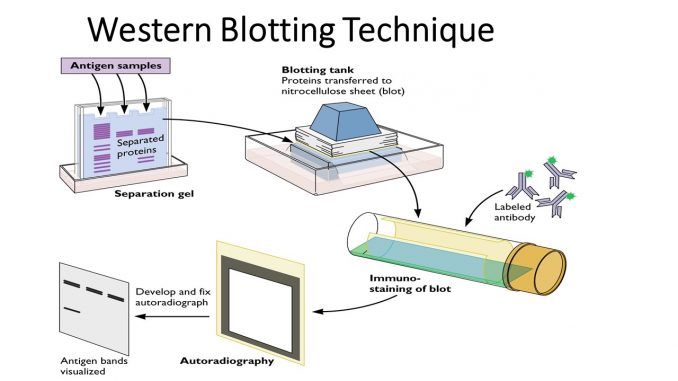
Western blotting is a widely used technique in molecular biology for detecting specific proteins in a complex sample. While the laboratory procedure—including protein extraction, electrophoresis, and transfer—is important, the ultimate goal is to correctly interpret the results. Understanding how to read and analyze Western blot data is essential for drawing meaningful conclusions about protein expression, size, and modifications.
1. Understanding the Blot Layout
A Western blot typically consists of protein bands on a membrane, which are visualized after incubation with specific antibodies and detection reagents. Each lane on the blot corresponds to a sample, and the position of bands is determined by molecular weight markers. The markers, often labeled in kilodaltons (kDa), serve as a reference to estimate the size of the target protein. Correct interpretation begins by identifying which bands correspond to the expected protein size.
2. Identifying Specific Bands
The primary antibody used in Western blotting binds selectively to the protein of interest. After detection, the presence of a band at the expected molecular weight indicates successful recognition by the antibody. Interpreting results involves assessing:
-
Presence or absence: A band indicates the protein is present; no band suggests it is absent or below the detection limit.
-
Size verification: Comparing band position to molecular weight markers ensures the correct protein is detected. Unexpected sizes may indicate isoforms, post-translational modifications, or protein degradation.
3. Assessing Band Intensity
Western blot results are often semi-quantitative. The intensity of a band reflects the relative abundance of the protein in the sample. Brighter or darker bands indicate higher or lower protein expression, respectively. However, factors like antibody affinity, exposure time, and protein loading must be considered. To account for these, housekeeping proteins (e.g., β-actin, GAPDH) are used as loading controls. Normalizing target protein intensity against these controls ensures reliable comparisons between samples.
4. Distinguishing Non-Specific Bands
Non-specific binding can result in extra bands or background signal. Proper controls and optimized antibody concentrations help minimize this. Non-specific bands may appear at unexpected molecular weights and can be distinguished by their inconsistency across replicates. Interpreting results requires recognizing these artifacts to avoid misidentifying them as target proteins.
5. Evaluating Experimental Controls
Controls are crucial for validating Western blot results:
-
Positive controls: Samples known to express the target protein confirm the antibody is functioning correctly.
-
Negative controls: Samples lacking the protein confirm that any detected signal is specific.
-
Loading controls: Housekeeping basis of immunoblotting ensure equal sample loading and transfer efficiency.
Careful comparison of experimental samples with controls ensures accurate interpretation and helps detect technical issues.
6. Quantification of Results
For more precise analysis, Western blot results can be quantified using imaging software. Band intensity is measured and normalized to the loading control, allowing comparison across multiple samples or experimental conditions. This semi-quantitative approach provides insights into protein regulation, expression changes, or treatment effects.
7. Common Interpretation Challenges
Several factors can complicate interpretation:
-
Smearing: May result from protein degradation or overloading.
-
Weak signals: May indicate low protein abundance, poor antibody affinity, or inefficient transfer.
-
Multiple bands: Can indicate isoforms, post-translational modifications, or non-specific binding.
Recognizing these issues and troubleshooting the protocol is essential for reliable results.
Conclusion
Interpreting Western blot results requires careful attention to band presence, size, intensity, and controls. Accurate analysis provides valuable insights into protein expression, modifications, and cellular processes. By combining proper experimental design with thoughtful evaluation, researchers can confidently draw conclusions and advance their understanding of molecular biology.